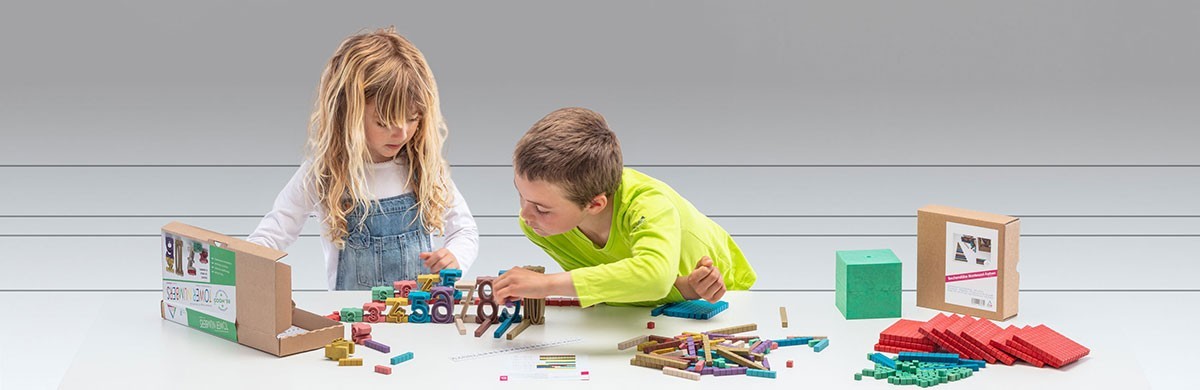
If you’ve ever watched a child slide beads across an abacus or a rekenrek, you’ll know how naturally engaging these simple tools can be. But beyond the colourful appeal, there’s strong evidence that physical maths resources—often called “manipulatives”—play an important role in learning.
In primary maths, children are still building their understanding of numbers, which are inherently abstract. Tools like the abacus and rekenrek make these ideas visible and tangible. By physically moving beads, children can see addition, subtraction and number relationships unfold, helping them develop a deeper number sense.
Research backs this up. The Education Endowment Foundation highlights manipulatives as a “powerful” way to support mathematical thinking, particularly when combined with high-quality teaching. Hands-on resources encourage children to talk about their ideas, spot patterns and build confidence—key ingredients for long-term success.
Rekenreks, for example, are designed in groups of five and ten, helping children quickly grasp number bonds and mental strategies. Similarly, the abacus supports early calculation skills and can even lead to stronger mental maths over time.
For parents, the takeaway is simple: maths doesn’t have to live on a worksheet. Giving children something to touch, move and explore can turn tricky concepts into something they truly understand—and even enjoy.